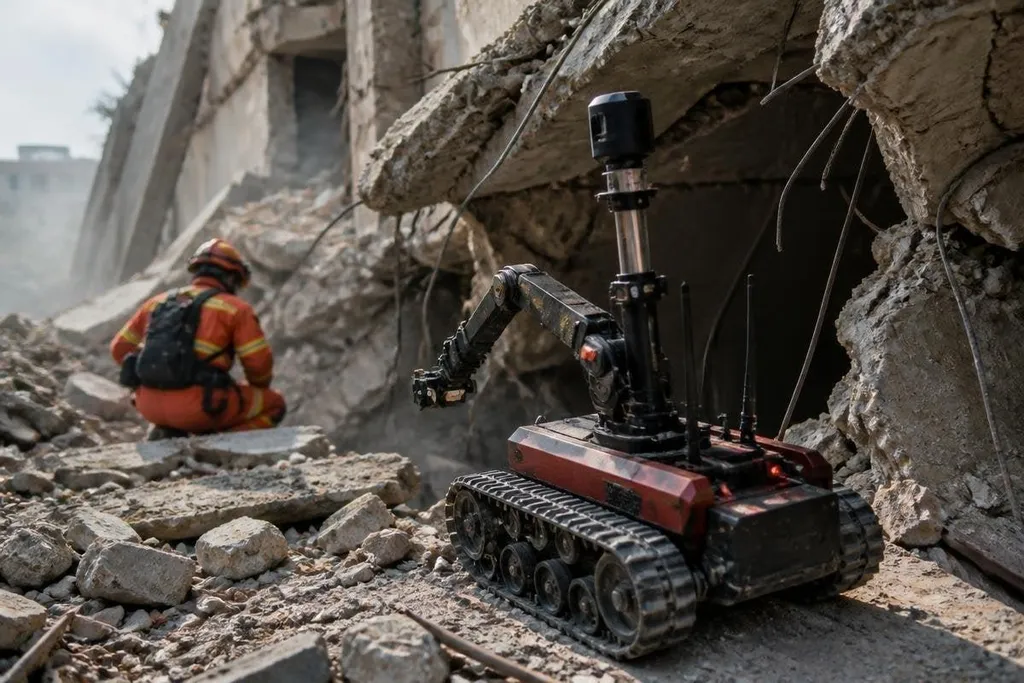
Rescue robots work in places that can injure people: damaged buildings, smoke-filled rooms, floodwater, and unstable ground. AI can help these robots read sensor data, spot useful paths, and support decisions when radio contact or visibility is poor.
Quick read
- AI can sort camera, thermal, sound, and mapping data for a remote operator.
- A rescue robot still needs a person to set the task and check risky actions.
- The hardest test is reliable work in dust, water, smoke, darkness, and broken terrain.
What AI adds to a rescue robot
A remote operator may receive video, thermal images, depth data, and readings from the robot’s motors. AI is software that finds patterns in this data. It can mark a person-shaped object, warn about a blocked route, or build a map from movement and sensor readings.
That support matters because a rescue scene can change while the robot moves. A stairwell may be blocked, a floor may give way, or smoke may hide an opening. The software can sort incoming data faster than a person working through several screens, while the operator keeps control of the task.
The robot still needs sensors that work in the scene. A camera cannot see through thick smoke, and a LiDAR sensor can struggle with some surfaces and airborne dust. AI can label bad data, but it cannot create a clear view where the sensors have none.
From remote control to shared control
Most rescue robots are remote-controlled. The operator sends movement commands, while onboard software handles small parts of the job, such as keeping balance, avoiding a wall, or holding a camera steady.
AI adds another layer. The operator might set a destination or ask the robot to inspect a doorway, then approve the route before movement starts. This reduces the number of small commands needed, which can help during a long search or a task with poor video.
The safety limit is clear. A robot should stop when its map is uncertain, its sensors disagree, or its planned path enters a dangerous area. A smooth demo can hide these cases because the route has already been chosen and the scene stays controlled.
In a rescue, a robot’s map can change when smoke blocks a camera or rubble shifts under its wheels. Robot 24 can report the named machine, test site, task, and date behind an AI claim. Those facts lead into the next section, where the hard work left to people begins.
Where the hard work remains
Rescue sites are poor places for systems trained only on clean examples. Rubble changes shape, surfaces move, lighting drops, and useful objects may be partly hidden.
A model that spots a person in a clear image may need a different test when only a hand, boot, or heat trace is visible.
Power and communications matter too. A robot may have enough battery for the drive to a search area but less time for careful inspection. A weak radio link can delay video and commands, so the operator needs clear warnings when the robot is acting from old data.
Training data brings another limit. Rescue teams need to know where the data came from, what scenes it covers, and how often the system makes a wrong call. A false person alert can waste time. A missed person alert carries a much higher cost, so teams need trials that measure both.
I’d judge an AI rescue robot by its stop behavior before its object-recognition score. A machine that asks for help at the right moment is easier to use safely than one that keeps moving with a bad map.
Before a team buys one
A rescue service can use this checklist when reviewing an AI feature:
- Name the task: decide if the robot will search, map, carry tools, inspect damage, or send video.
- Check the sensors: list what works in smoke, darkness, water, dust, heat, and low light.
- Test lost links: see how the robot stops when commands or video are delayed.
- Measure wrong calls: record missed people, false alerts, blocked paths, and unsafe movement.
- Set human control: define which actions need approval and which actions may run on their own.
- Plan recovery: confirm how a team finds, lifts, charges, and repairs the robot after a failed run.
These checks move the discussion from AI as a label to the work a rescue team needs done. They also expose costs that may sit outside the robot price, including training, spare parts, network equipment, and scene-specific testing.
AI will make rescue robots more useful when it helps people see problems sooner and keeps the robot cautious when the data is weak. The open test is still the same: can the system help a trained team find and reach people safely in a real damaged site?