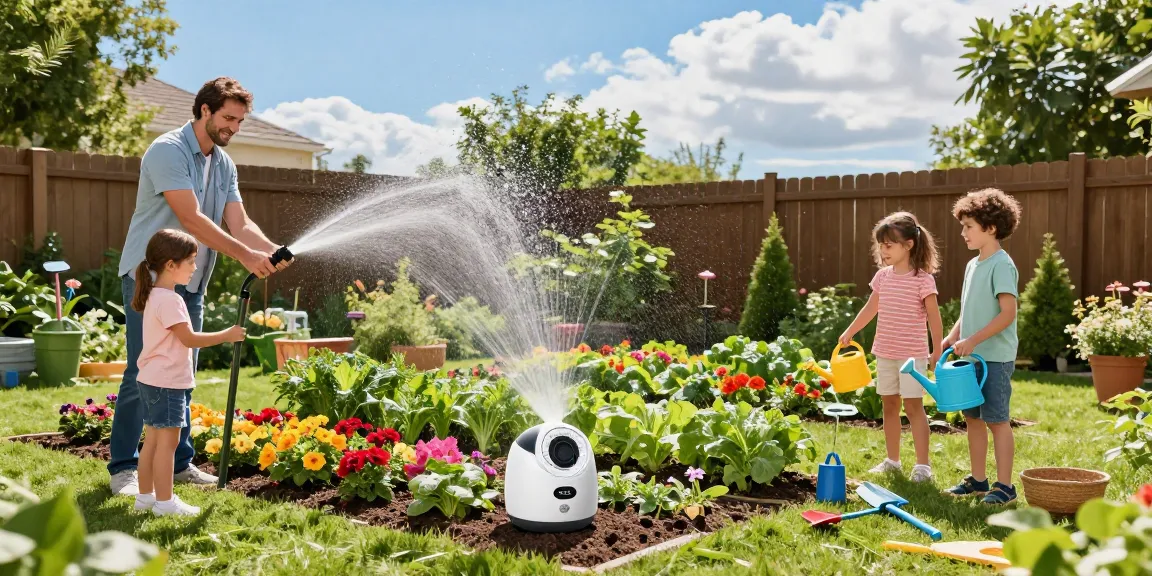
When Laura noticed muddy footprints leading from her house to the backyard, she thought it was the dog—until her hostas started yellowing and the lawn felt spongy underfoot. She had a new sprinkler system but suspected the controller was running too long. This guide shows practical steps a homeowner like Laura can take to diagnose overwatering and correct it with a smart irrigation timer and the right watering setup.
Recognize the Signs of Overwatering and Diagnose the Problem
Overwatering has telltale symptoms: yellowing or wilting leaves despite wet soil, moss or fungal growth, standing water after irrigation, slow-draining soil, and compacted, soft turf. For a quick check, stick a trowel or soil probe 3–6 inches into the root zone after a scheduled run. If the soil is saturated and stays soggy 24 hours later, you likely have excess water.
Concrete checks to run today
- Probe several spots (lawn, flower bed, container) after irrigation to compare moisture depth.
- Look at plant symptoms per zone—shallow-rooted flowers versus deep-rooted turf react differently.
- Measure run-off and puddling after a typical watering cycle; note which zones overflow first.
Example: A 5,000 sq ft lawn with clay soil can hold more surface water and drain slowly. If your system runs 30 minutes every other day, that may saturate clay and drown roots. According to the EPA’s WaterSense program, smart irrigation controllers can save up to 8–30% of outdoor water use by adjusting schedules to conditions (source). That range matters because the savings depend heavily on correctly matching run times to soil and plant needs.
Match the Right System to the Problem: Solutions by Scenario
Problem: Short, frequent sprinkler cycles causing soggy turf. Solution: Switch to fewer, deeper soakings and add a smart timer for precision. A WiFi timer such as the RainPoint model lets you replace manual run times with a schedule based on zone-specific needs, so shallow-rooted areas get different treatment than deep-rooted ones.
Problem: Flower beds with constant wet crowns and root rot. Solution: Convert to root-zone watering—either soaker hoses or drip lines—and run shorter, less frequent cycles controlled by a smart timer to avoid surface saturation. For flower beds, a RainPoint-compatible drip setup delivers water slowly at the roots, preventing the splash and runoff that comes from overhead sprinklers.
Problem: Vegetables showing yellow, limp leaves and sloughing roots. Solution: Install a precision drip kit and run multiple short cycles per day only during hot periods, or use a moisture-based schedule. Vegetable gardens benefit from targeted emitters; they deliver consistent moisture to the root zone without flooding pathways or neighboring beds.
Simple system comparisons
Yard TypeCommon Cause of OverwateringBest FixSmall lawnExcess run time / frequent cyclesMobile sprinklers + smart timer with weekly adjustmentsLarge lawnUniform schedules for mixed soilSmart in-ground system with zone-specific timingFlower bedsOverhead watering and runoffSoaker hoses or drip with short, infrequent runsVegetable gardenInconsistent moisture levelsDrip kit + multiple short cycles or sensor-based control
How to Reprogram a Smart Irrigation Timer Step-by-Step
Once you’ve identified the problematic zone and chosen the right delivery method, reprogramming a smart controller is the key fix. Here’s a practical, stepwise approach using a smart timer and soil feedback.
- Map your zones. Walk the yard and label each zone by soil type and plant needs—lawn, shade, beds, pots.
- Set baseline run times. For turf in loamy soil, start with 15–20 minutes per zone, just 2–3 times per week; for clay, shorten each run but add soak-and-wait intervals (e.g., 10 min run x 3 repeats spaced 4 hours apart).
- Use cycle-and-soak. If water runs off on slopes or clay, split a single irrigation event into multiple short cycles to allow infiltration.
- Enable weather adjustments. Connect WiFi and turn on weather-based adjustments so the timer reduces or skips runs after rain.
- Incorporate soil moisture sensors. If you’re seeing overwatering despite shorter cycles, add a soil sensor to skip runs when moisture is adequate.
Example: For a shady flower bed, program the timer for one 8-minute drip cycle every three days in cool weather. During a heatwave, adjust to two 8-minute cycles with at least 6 hours between them. If you prefer hands-off soil-driven control, click here to fix overwatering issues with a smart irrigation timer and pair a moisture sensor with your controller.
Fine-Tuning: Monitoring, Adjusting, and Preventing Future Overwatering
After reprogramming, monitor outcomes for two to four weeks. Use these checks and realistic figures to measure improvement:
- Soil probe readings: aim for moisture in the root zone without saturation—about 50–75% of field capacity for most ornamentals.
- Visual cues: leaf color, new growth, and absence of standing water indicate progress.
- Water use: many smart controllers provide cumulative gallons used per week; compare usage before and after adjustments. A properly tuned system often cuts outdoor water use substantially—some homeowners report 20–30% drops depending on previous wasteful settings.
Concrete tweak examples: If a zone still puddles after a run, cut each cycle by half and add a second cycle later that day to allow percolation. For container plants, switch to slow, steady self-watering devices and run them briefly twice daily in hot spells rather than long runs that wet foliage and overflow saucers. For large properties where manual checks are impractical, a WiFi timer from RainPoint can automate zone-specific schedules and deliver real-time adjustments based on weather forecasts.
Preventive habits that save water
- Seasonal schedule reviews—adjust weekly during shoulder seasons.
- Calibrate emitters yearly; clogged or misaligned heads cause uneven watering and local overwatering.
- Mulch beds to reduce evaporation and lower required run times.
Example figure: University extension studies often recommend reducing watering frequency while increasing depth for most lawns; one extension (e.g., university .edu turf resources) suggests deep, infrequent runs encourage root growth and reduce disease risk. For specific regional guidance, check local extension publications for recommended run times per soil type.